
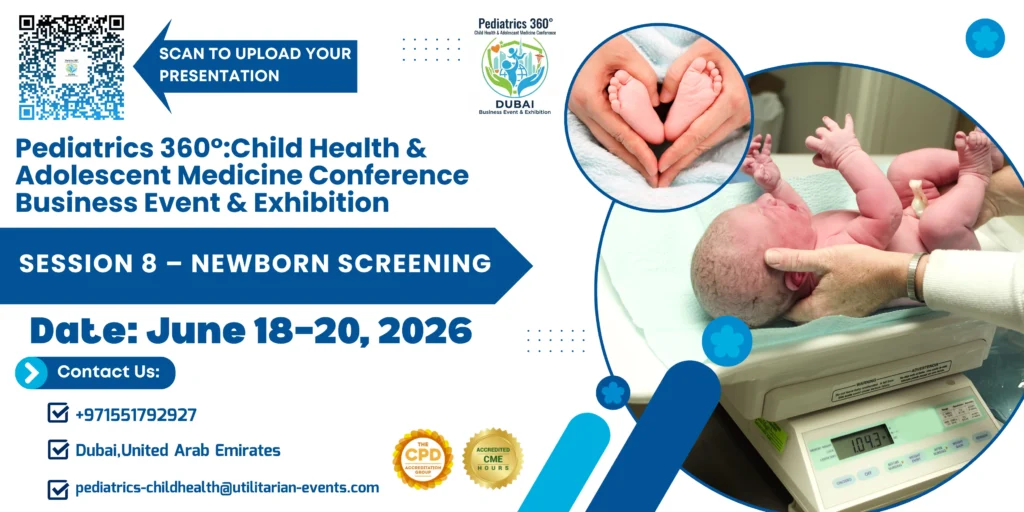
Purpose: Newborn screening is a vital public health program designed to identify genetic, metabolic, hormonal, and congenital disorders shortly after birth, often before symptoms appear. Early detection through screening enables timely intervention, preventing serious complications, long-term disabilities, and infant mortality, while supporting healthy growth and development.
Keynote Points:
- Importance of early detection and intervention in newborn health
- Common conditions identified through screening (metabolic, endocrine, genetic, hearing, and heart disorders)
- Advances in screening technologies and laboratory diagnostics
- Role of expanded and genomic newborn screening
- Integration of digital health and data systems for tracking and follow-up
- Ethical, legal, and consent considerations in newborn screening programs
- Global disparities and strategies to improve screening coverage and access
Benefits:
- Enables early treatment and improved health outcomes
- Prevents irreversible complications and disabilities
- Reduces infant morbidity and mortality
- Supports healthy growth and neurodevelopment
- Decreases long-term healthcare and societal costs
- Strengthens public health systems and preventive care